

When organising any event—large or small—the question of how many chairs you need is one of the most important decisions you’ll make. Whether you’re planning a conference, a seminar, a dining event, a wedding-style celebration, a community gathering, a festival zone, an exhibition or a one-off corporate announcement, the right number of chairs affects comfort, movement, safety, ambience and the overall guest experience.
Many novice organisers underestimate how much layout, space, table arrangements and guest flow influence how to calculate seating correctly. This guide covers the full picture: what to ask, what to measure, what to avoid, and how to make confident decisions no matter the event style.
It matters because overcrowded seating creates stress and discomfort, while sparse seating makes a venue feel empty and poorly arranged. With a structured approach, you can find the perfect balance.
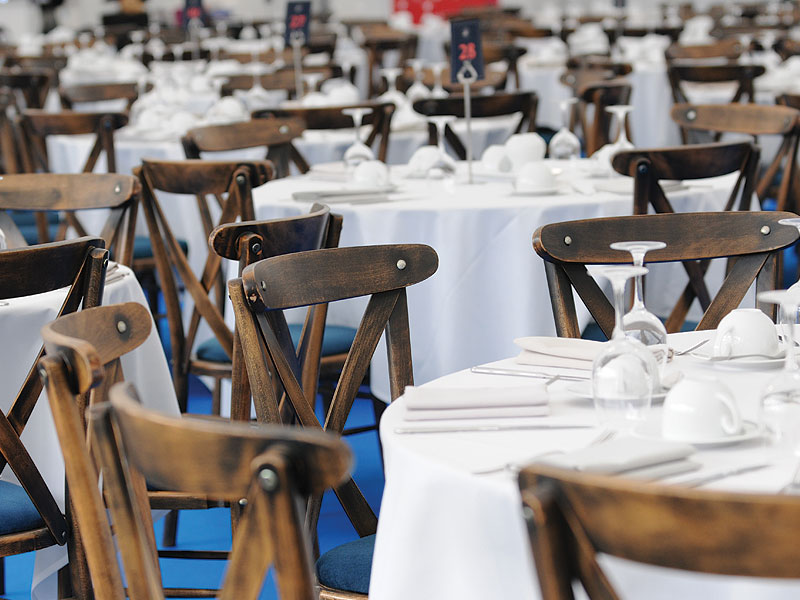
Calculating seating requirements for an event means determining the right number of seats based on guest numbers, event type, layout, safety rules and available floor space.
It’s more than just ordering the same number of chairs as guests. You need to consider things like:
Understanding these factors helps you plan accurately and avoid last-minute adjustments.
It’s important to calculate numbers properly because seating directly affects comfort, layout flow, accessibility and the professional appearance of your event.
Incorrect seating numbers create very noticeable problems. Too few can cause frustration, overcrowding and delays. Too many chairs make the venue feel sparse, interfere with movement and may lead to safety concerns. Getting this right ensures your event feels well-organised, welcoming and thoughtfully planned.
Here’s why accurate calculations matter:
Guests need enough space to sit comfortably and move in and out of chairs without squeezing past others.
Overcrowded seating areas can create fire hazards or block emergency exits.
The right spacing helps set the mood—neither cramped nor empty.
Good layout supports smooth transitions between seating, networking, dining, entertainment and presentations.
If you’re serving food or drinks, you need space for waiting staff and guest movement.
Calculating seating correctly is one of the easiest ways to elevate the professional feel of any UK event.
Guest numbers determine your minimum chair requirement, and additional seats are then added for layout changes, different zones and unexpected arrivals.
Your starting point is always the expected number of guests. But you rarely order exactly that number.
Here’s the rule of thumb:
Order seating for 100% of your anticipated guest count plus a small buffer.
Not everyone sits at once. Examples include:
In these cases, the number of seats needed may be 30–70% of the total expected attendance.
It’s standard practice to add:
Guest numbers set the baseline, but smart organisers always plan for variability.
Your event type determines the seating style, spacing requirements and the number of chairs needed to create a comfortable layout.
Different event formats use chairs in completely different ways. Calculating correctly means identifying the type of event first.
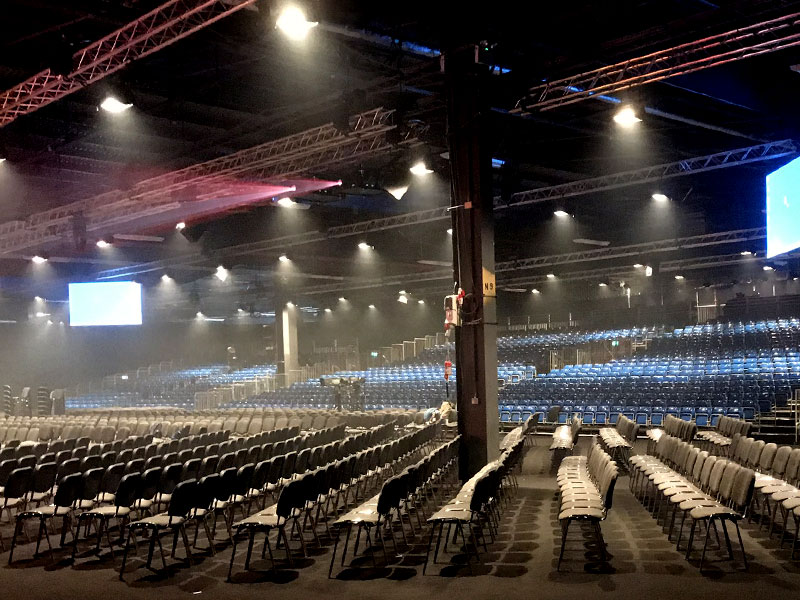
Here are the main categories:
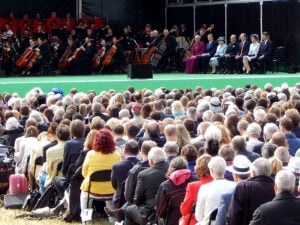
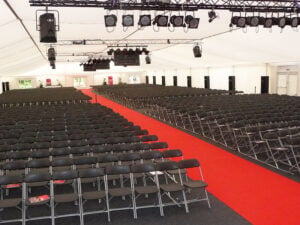
These events usually use theatre-style, straight-row seating. This layout is:
For conferences:
These smaller events may use:
Each format changes how many chairs fit into the space.
These events require careful spacing.
You’re not just calculating chairs—you’re calculating chairs + tables + guest movement.
Important considerations:
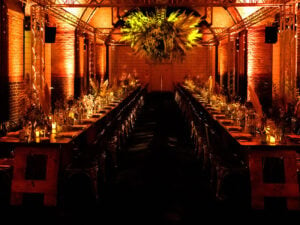
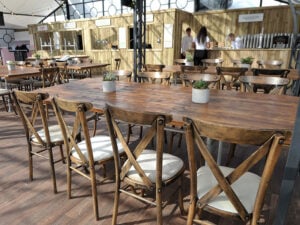
Dining layouts often use:
These events often include:
Each zone has its own calculation.
For festivals, community events or short-term gatherings:
You may only need seating in:
This often requires fewer chairs overall.
Event type is one of the strongest indicators of how many seats you will actually need.
You calculate chairs based on available space by measuring the floor area, choosing a layout and applying spacing guidelines for comfort and safety.
Many novice organisers focus only on guest numbers, but space dictates everything. Even if you have 300 guests, you must consider whether the room comfortably holds 300 chairs.
Here’s how to do it step by step:
Exclude:
You only want to measure the area where seats can realistically go.
The layout determines spacing.
Examples:
For comfort and safety:
Important for managing flow.
Ideal aisle width:
Set up 6–10 chairs in the venue to test spacing visually.
This gives helpful inspiration for adjusting the layout.
At this point, you can determine how many chairs:
This ensures you strike a balance—neither overcrowded nor sparse.
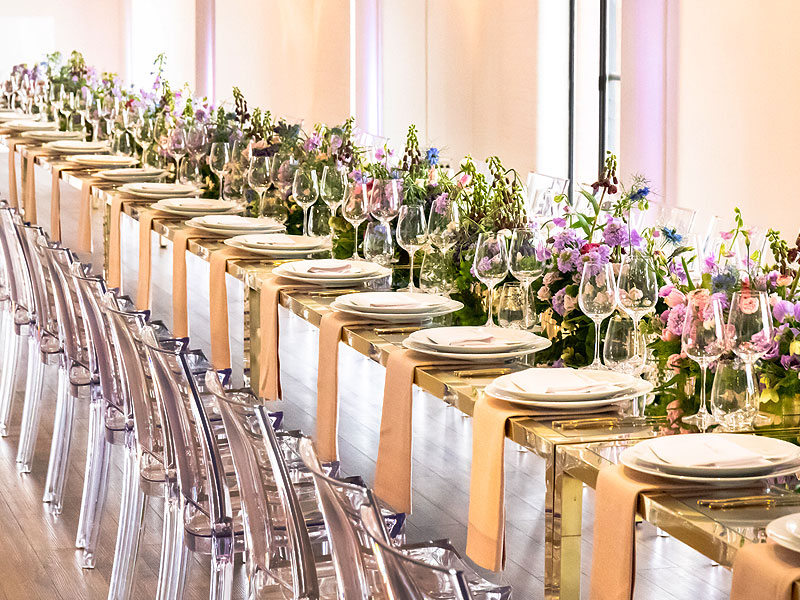
You calculate seats for rows by deciding the row width, choosing aisle spacing and multiplying the number of rows by the number of seats per row.
Conference seating is the easiest format to measure.
Here’s a simple method:
Subtract fixed items such as:
Most organisers use:
Central aisles are usually 1–1.5 m wide.
Standard chair width: ~50 cm
10 chairs in a row = ~5 m
Allow approx. 80–100 cm between rows, depending on comfort level.
If you have:
Straight-row seating is the most forgiving format for large audiences.
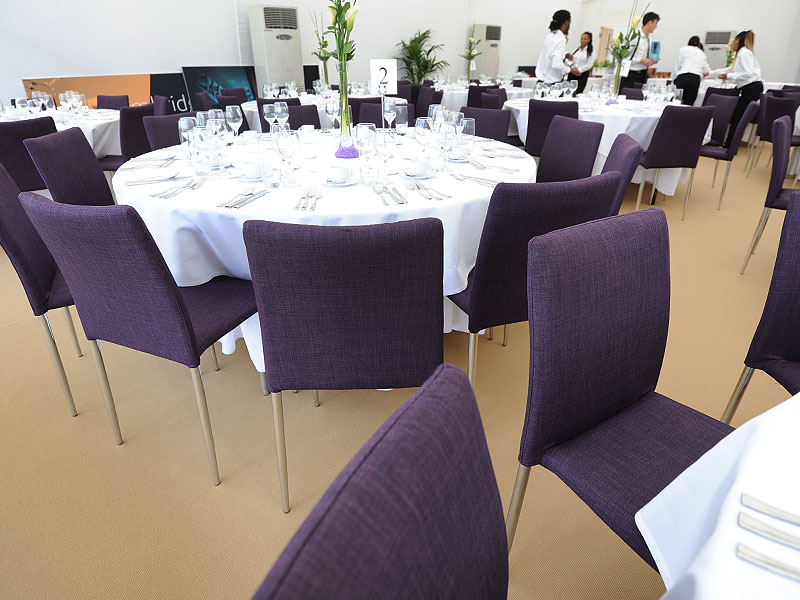
You calculate seating for dining events by choosing your table size, determining seat capacity and ensuring enough space for movement and catering staff.
Dining layouts require more space because guests need to sit, stand, eat, move and be served.
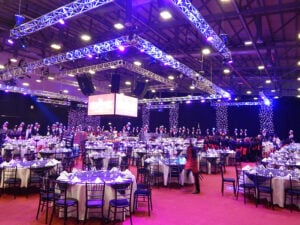
For 6ft round tables:
For 5ft round tables:
For trestle tables:
Always prioritise comfort and spacing over fitting in the maximum number of tables.
Because:
Finding the perfect balance is part science, part visual judgement—and experience in seating arrangements helps you refine it.
Commonly forgotten factors include access routes, additional zones, staging placement, catering areas and last-minute guest increases.
Even well-organised planners can overlook items that quietly affect the seating plan.
Here’s what people often forget:
People need room to walk between seating areas. If aisles are too narrow, the event becomes congested.
Guests often sit before they enter the main event. These zones require additional seating.
Press conferences, corporate announcements, award ceremonies and panel events often require extra rows.
If someone is working shifts, they need somewhere to sit when off rotation.
Performers, speakers and presenters need comfort before going on stage.
Hybrid events may include extra lounges or streaming areas.
Accessibility guidance is essential for UK events and must be factored into the layout.
A 5–10% buffer is always wise.
By catching these details early, you avoid last-minute stress.
You avoid overcrowding or sparse seating by balancing guest numbers with visual density, comfort spacing and logical flow.
Both extremes—too many chairs or too few—harm the guest experience.
Here’s how to avoid them:
The sweetest spot is a layout that feels intentional, organised and engaging without feeling restrictive.
Organisers can adapt by adding buffer chairs, reworking aisles, using flexible layouts and contacting suppliers early when numbers rise unexpectedly.
Event attendance can change right up to the last moment. Here’s how to handle it:
The simplest strategy is hiring an additional 5–10% seats.
Rows and clusters can adapt more easily than rigid designs.
Widen or tighten aisles slightly to accommodate extra seats.
Banquet tables often have small ranges for seating (e.g., 10–12).
Registration or breakout rooms can sometimes spare a few chairs.
Many chair hire companies can deliver extras if needed, especially if they operate nationwide with deep stock.
Responsiveness is key, especially for short term or one-off events where numbers aren’t fixed until late in the planning.
Useful tools include venue floorplans, CAD layouts, seating calculators, tape measures and sample chair setups for real-world testing.
Accurate calculations come from both planning tools and physical testing.
Here’s what helps:
Most UK venues supply scaled diagrams.
Suppliers and professional planners often use CAD to lay out:
These help estimate:
Marking out a few chairs physically is extremely helpful.
Experienced hire companies can accurately estimate capacities based on venue dimensions.
These resources give novice organisers a strong starting point when it comes to the rental of chairs.
The biggest mistakes are ignoring space constraints, assuming all chairs fit equally, overestimating capacity and not planning for comfort.
Here are the most common pitfalls:
You need spares and additional zones.
It is impossible to plan accurately without measuring.
Trying to squeeze in too many chairs looks unprofessional and creates safety issues.
Large tables reduce total seating capacity.
Food service needs space.
These reduce usable floor space dramatically.
Accessible seating is essential for any UK event.
Avoiding these mistakes makes your event look more polished and professional.
Careful chair calculations improve guest experience by ensuring comfort, clear movement, balanced visuals and efficient event flow.
Good seating makes events feel smooth, effortless and enjoyable.
Benefits include:
It also reduces stress for organisers by preventing last-minute seating emergencies.
If you’re preparing for an event and want to calculate the ideal number of chairs with confidence, now is the perfect time to start planning your layout. Think about your available space, event type, guest numbers and movement flow.
Whether you’re organising a conference, a banquet, a celebration, a community event or a nationwide corporate presentation, taking the time to calculate and test your seating early will pay off. You can find inspiration by exploring different chair styles and layout options, and you can adjust as needed to ensure your event feels balanced, engaging and comfortable for every guest who attends.
It depends on room size, but typically 80–120 chairs fit comfortably with theatre-style rows.
Leave 50–75 cm for comfort, and more if catering staff need to move around.
Usually 10–12 chairs, depending on the amount of space you want guests to have.
Straight-row theatre-style seating is the easiest to calculate and set up.
Yes—always add 5–10% more chairs than your guest list to allow for unexpected changes.